



Earlier this year at FanGraphs, I found out what sort of WHIP does the same damage as an equivalent ERA. Too frequently, fantasy managers focus on a pitcher's ERA or ERA estimators and ignore WHIP entirely. In roto leagues, the two categories are evenly weighed, so it's key to focus just as much on WHIP. This week's leaderboard will examine a few of the starters whose ERA projections hide ratio-killing WHIP.
The formula I found in the original article was:
WHIP ERA = 6.017 * WHIP - 3.691
Using that formula, I took the FanGraphs Steamer starting pitcher projections (min. 10 projected starts), converted each pitcher's WHIP to an equivalent ERA value, and then found the largest differences. The main reason for using the Steamer projections is that they include a projected ground ball rate.
Here are the twenty pitchers whose projected "WHIP ERA" is larger than their actual ERA.
| Name | Team | IP | GS | ERA | WHIP | ERA equivalent to WHIP | Difference | BB% | GB% |
|---|---|---|---|---|---|---|---|---|---|
| Jose Soriano | LAA | 177 | 31 | 3.66 | 1.38 | 4.59 | 0.94 | 9.9% | 57.2% |
| Andre Pallante | STL | 157 | 28 | 4.22 | 1.45 | 5.05 | 0.84 | 8.9% | 56.6% |
| David Peterson | NYM | 182 | 31 | 3.68 | 1.35 | 4.43 | 0.75 | 9.0% | 51.6% |
| Clay Holmes | NYM | 176 | 31 | 3.92 | 1.39 | 4.67 | 0.75 | 9.3% | 54.3% |
| Hurston Waldrep | ATL | 146 | 26 | 4.31 | 1.44 | 4.97 | 0.66 | 10.2% | 49.5% |
| Andrew Alvarez | WSN | 99 | 11 | 4.10 | 1.40 | 4.74 | 0.63 | 8.9% | 50.0% |
| Joe Boyle | TBR | 78 | 10 | 4.07 | 1.39 | 4.66 | 0.60 | 11.9% | 44.2% |
| Anthony Kay | CHW | 139 | 24 | 4.23 | 1.41 | 4.82 | 0.59 |
Earlier this year at FanGraphs, I found out what sort of WHIP does the same damage as an equivalent ERA. Too frequently, fantasy managers focus on a pitcher's ERA or ERA estimators and ignore WHIP entirely. In roto leagues, the two categories are evenly weighed, so it's key to focus just as much on WHIP. This week's leaderboard will examine a few of the starters whose ERA projections hide ratio-killing WHIP.
The formula I found in the original article was:
WHIP ERA = 6.017 * WHIP - 3.691
Using that formula, I took the FanGraphs Steamer starting pitcher projections (min. 10 projected starts), converted each pitcher's WHIP to an equivalent ERA value, and then found the largest differences. The main reason for using the Steamer projections is that they include a projected ground ball rate.
Here are the twenty pitchers whose projected "WHIP ERA" is larger than their actual ERA.
| Name | Team | IP | GS | ERA | WHIP | ERA equivalent to WHIP | Difference | BB% | GB% |
|---|---|---|---|---|---|---|---|---|---|
| Jose Soriano | LAA | 177 | 31 | 3.66 | 1.38 | 4.59 | 0.94 | 9.9% | 57.2% |
| Andre Pallante | STL | 157 | 28 | 4.22 | 1.45 | 5.05 | 0.84 | 8.9% | 56.6% |
| David Peterson | NYM | 182 | 31 | 3.68 | 1.35 | 4.43 | 0.75 | 9.0% | 51.6% |
| Clay Holmes | NYM | 176 | 31 | 3.92 | 1.39 | 4.67 | 0.75 | 9.3% | 54.3% |
| Hurston Waldrep | ATL | 146 | 26 | 4.31 | 1.44 | 4.97 | 0.66 | 10.2% | 49.5% |
| Andrew Alvarez | WSN | 99 | 11 | 4.10 | 1.40 | 4.74 | 0.63 | 8.9% | 50.0% |
| Joe Boyle | TBR | 78 | 10 | 4.07 | 1.39 | 4.66 | 0.60 | 11.9% | 44.2% |
| Anthony Kay | CHW | 139 | 24 | 4.23 | 1.41 | 4.82 | 0.59 | 8.8% | 49.5% |
| Framber Valdez | 190 | 31 | 3.47 | 1.28 | 3.99 | 0.52 | 7.9% | 55.9% | |
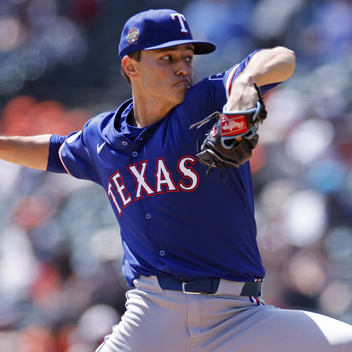
| Jacob Latz | TEX | 130 | 19 | 4.44 | 1.44 | 4.96 | 0.52 | 11.3% | 38.7% |
| Patrick Sandoval | BOS | 119 | 19 | 3.96 | 1.36 | 4.47 | 0.51 | 9.1% | 46.5% |
| Marcus Stroman | 140 | 26 | 4.66 | 1.47 | 5.15 | 0.49 | 8.6% | 49.1% | |
| Hunter Barco | PIT | 85 | 10 | 4.07 | 1.37 | 4.55 | 0.49 | 9.4% | 44.1% |
| Nolan McLean | NYM | 163 | 28 | 3.74 | 1.32 | 4.23 | 0.49 | 9.1% | 50.0% |
| Lance McCullers Jr. | HOU | 142 | 24 | 4.41 | 1.42 | 4.85 | 0.44 | 10.3% | 45.9% |
| Alex Cobb | 64 | 11 | 3.92 | 1.34 | 4.36 | 0.43 | 7.5% | 52.7% | |
| Landen Roupp | SFG | 131 | 24 | 4.14 | 1.37 | 4.57 | 0.43 | 9.1% | 45.9% |
| Jose Quintana | 145 | 26 | 4.61 | 1.45 | 5.02 | 0.42 | 8.5% | 44.1% | |
| Kodai Senga | NYM | 123 | 19 | 3.92 | 1.33 | 4.34 | 0.42 | 9.9% | 43.8% |
| Trevor McDonald | SFG | 86 | 13 | 4.15 | 1.37 | 4.56 | 0.41 | 7.7% | 52.0% |
| Average | 9.3% | 49.1% |
Before examining some of the individual players, the last line contains the values to focus on. These pitchers walk nearly 10 percent of the batters they face. Additionally, they keep the ball on the ground almost 50 percent of the time. While groundballs will keep a pitcher's ERA in check by limiting home runs, about 30 percent of all groundballs will go for hits.
Simply, if targeting groundball pitchers, make sure they have a walk rate below eight percent. It may seem that all the groundball pitchers are on this list, but note the absence of Cristopher Sanchez, Logan Webb, Yoshinobu Yamamoto and Max Fried, who create a ton of groundballs while keeping the walks under control.
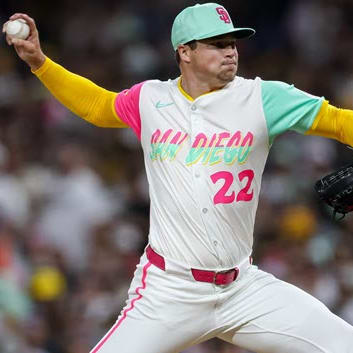
Jose Soriano: His 65 percent groundball rate led all qualified pitchers last season. (Pallante was next at 59 percent.) That groundball rate, along with a career 11 percent walk rate, means he's going to be a major drag on WHIP.
Unlike some of the guys featured, he doesn't help much in strikeouts, with just an 8.1 K/9.
Andre Pallante: Pallante is barely a streaming option. Besides the WHIP being a sink, his projected 4.22 ERA is not a help, nor is his sub-7.0 K/9. Maybe start him against Pittsburgh. Maybe.
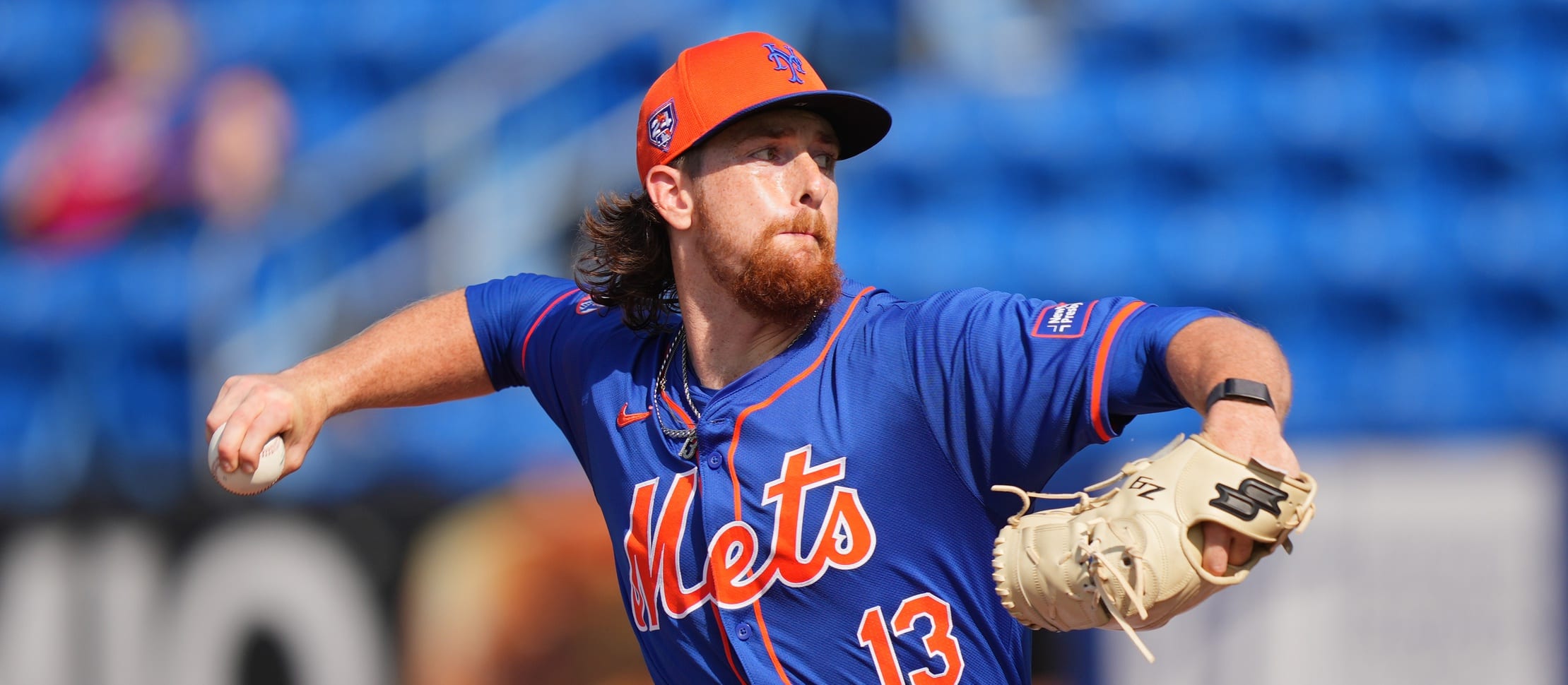
David Peterson: Peterson is a solid major-league pitcher who can keep a MLB team in the game with a 4.00 ERA and thereby accumulate some Wins. All that averageness is undone by his 1.35 WHIP.
I don't see him changing, especially after posting a 1.61 WHIP in the second half of last season.
Clay Holmes: The Mets love the high-walk, high-groundball guys, with four of them featuring on the above chart (Holmes, Peterson, McLean and Senga).
Holmes's transition from relieving to starting went better than I expected on the surface (3.53 ERA, 12 wins), but his K%-BB% was almost cut in half (from 17.0 percent to 8.9 percent). He seemed to wear down in the second half, with his xFIP going from 4.15 to 4.41.
Hurston Waldrep: He's struggled with walks in the minors and majors, with his 3.5 BB/9 last season being one of his better results. He didn't end the season on a high note, with a 4.8 BB/9 and 6.10 ERA in September.
Andrew Alvarez: I thought there would be more love for Alvarez (who's been picked just five times in 40 NFBC Draft Champions drafts) after he posted a 2.31 ERA and 1.11 WHIP in 23 innings last season. Fantasy managers have smartened up after seeing the 26-year-old's 91 mph fastball, 4.16 xFIP and 3.9 BB/9.
Joe Boyle: A career 5.7 BB/9 is not going to cut it no matter how many guys he strikes out.
Framber Valdez: Valdez's ERA projection is low enough that his WHIP ERA is still at a reasonable level (the only sub-4.00 value featured). Quite a bit of the free agent's 2026 value will be tied to the infield defense of his new team.
Lance McCullers Jr., Alex Cobb, Patrick Sandoval: Besides being injury risks, these pitchers could tank a team's WHIP. Two great reasons to ignore them.
Nolan McLean: At the NFBC, McLean is the first prospect/rookie pitcher being drafted. He struggled with his control (12 percent walk rate) and had a .333 BABIP, leading to a 1.30 WHIP.
McLean's short sample looks great (2.06 ERA, 2.78 xFIP, 21.8 percent K-BB%, 61 percent groundball rate). By digging a little deeper, his 10.9 percent swinging strike rate and 36.4 percent ball rate aren't that good.

The results here aren't great. There is a lot to like about McLean, but don't be surprised if things head south fast.